Tuesday, July 28, 2009

JUDGE A BOOK BY IT'S COVER


We are pleased to issue volume 2 in a long running series of books that record each collection as a chapter in our history. Lest we not forget our journey.
An often likable and some say collectible item, the book is foremost a product guide to share the work and help spread the word with our stores and sales teams. A few books in very limited numbers are held back for purchase in the Denham store.

Continuing our letter of intent, we've approached the craft of book design with a modicum of tradition. The result is a considered study of the accepted process of book making,
challenging the time-honored belief that "a book should not be judged by it's cover".
In this instance, we feel it should.

Although we've temporarily published the contents online at the brilliant issuu.com,


our preference for a printed book remains unaltered. Adding a timeless spine of influence to your bookshelf.

But conventional book binding has been triumphantly destroyed with the help of a circular saw. We've hacked at the contents to create a double-front cover. Unconventional, slightly brutal, but ultimately functional:

Book 1 neatly contains a collection overview
Book 2 includes press releases, interviews, dedications and photos. As well as a sub-section showing a few pieces from our library of divine revelation: the DENHAM GARMENT LIBRARY.

This is however no easy objective. To avoid the pages 'fanning out' the books are first printed, glued and bound, before each book is half-folded, then sawn-off by hand with a spine-chilling razor sharp blade. Aimed with pin-point precision and taking care to avoid the inevitable extended pinky finger. Thankfully no fingers were lost in the making of these books.

An exercise in cutting-edge craftsmanship from our print engineer.


Sunday, July 19, 2009

FIRES OF THE EAST & WEST

Whether fighting the flames in the East or the West, there was a time when Utility was Luxury

We said at one point that we don't collect in order to covet. The greed of pure selfish possession would probably embarrass us a bit. We do collect. As a team and as individuals we've been using archival garments as silent-but-effective personal tutors for a long time and the excitement only increases.

Last week we found a pair of antique Japanese fireman's trousers. When they first caught our eye they looked familiar somehow
(socrates said we experience a sensation of "rightness" during the acquisition of knowledge because our understanding awakens awareness of divine patterns previously dormant in our souls... -but none of us paid that much attention in class). Anyway, these trousers awakened awareness of something.

It only took another minute or so to remember we owned another pair of work pants believed to be turn-of-the-century fireman's trousers...   -Only these came to us by way of Britain. They're one of the studio's favorites. Can't Bust 'Em.

Compare the two and it's very clear which is from the East and which is from the West. But adjust your perception just a little and the similarities start appearing. Both are crafted from extremely rugged black selvedge fabric. Both show the effect of the natural twist associated with classic denim workwear.

Turn them both over and the story continues.

B
oth designs utilize a functional cinch-back. The western variation employing a buckle and the eastern version using a full sash belt wrapped and tied toward the center-front.  Both cinches attached in nearly the same location with rugged stitch work just to the right and left of the center-back.

Both pairs feature cuff-wear on the same leg. The Can't Bust 'Em specimens have been patched with wool, the Japanese pair has yet to be repaired.

Both pairs use natural plain-weave muslin elements to apply branding. The Can't Bust 'Em pair brands the outside, the Japanese labeling is internal.

Use of the softer muslin extends into the internal waistband treatments on both, though the Can't Bust Em's uses a yarn-dyed stripe/dot fabric. Both use a soft secondary fabric for edging and fly-facings. Brushed moleskin in the case of the Cant' Bust "Em's, and a softer finer indigo-dyed twill on the Japanese design.

Both feature strong, generously proportioned functional front pockets. The western pair also feature back pockets (a jeanswear innovation).

Hey, all this commitment to quality almost verges on luxury by the standards of the day. But we guess whether guys were fighting fires in Great Britain or Japan, utility would have been the real luxury.

If you've gotten this far down this posting, God bless your patience. We're just crazy for this stuff. Sue us. But what's more important is what we do with it. And it's this kind of inquiry that has inspired our commitment to our own modest array of construction features. In our case it includes:
> Japanese Selvedge
> Leather Rivet-Saddles
> Fully Bound Internal Flies
> 7-Point Anatomical Hip-Pockets
> Darted Articulation
> Fully Tailored 3xChambray Waistbands


... -and so on. But to see what we mean or when and where we employ these standards you'll need to come hangout with us.

Saturday, July 18, 2009

JUST A BUTTON PART TWO

[part one here]

When the Product was the Message

Our research has been taking us allover the place this season. Lucky us. Sessioning with a Russian & US military uniform expert in Berlin, digging through the archive of an RAF & Royal Navy collector outside Paris... In an odd twist entering the inner-sanctum of a Tokyo collector specializing in turn-of-the-century US western and workwear only later to get the down-low on Japanese textiles from an American in Brooklyn (passion for garment history effectively folding the map pressing the East right up against the West). During these exploits we've curated some incredible new research material for the DGL.

On the Button
A natural part of our design focus is the issue of utility. We consider denim and the related world of workwear to fall into the realm of Utility Tailoring. As such the development of very fundemental utilitrarian garment compenents provides endless fascination and inspiration. It allows us all here at Denham and any other label sharing this ambition to push things forward.

You can't get much more fundamental than a button. Our research recently reminded us of a time when utility was the point, and the product was the message.

Besides pushing performance in the area of durability, evolving concepts like the shank-assembly and split-ring attachement, buttons from the first golden era of workwear design spelled-out their intentions right down at the detail level. They litterally announced their design objectives.

This was the case whether they were aiming to wear well like anthracite, be strong & reliable, even as strong as granite or the rock of gibraltar.

If the intention was to ensure you'd never ripum (or alternatively be rip proof), they'd deliver sure service, offer a true fit, have the brand take responsibility to watch the wear, load nuff stuff into the construction so you could think of them as ironalls instead of overalls... -if they made the effort to sanforize or use 8 oz shrunk, then they engraved or embossed that promise where it couldn't be forgotten. Deep into the product. Somewhere along the line, well after this period, the "message" became so disassociated from the product that the marketing took on a life entirely of its own. But these examples are from before all the extravagant aspirational lifestyle claims and media hype, when product and message were less detached from one another. Simpler times we guess.

Not to mention the obvious attention to balancing tradition with invention (our own modest obsession), using a traditional button but upgrading the durability by exchanging the convention of weak threads for inventive steel rings. Given all this its a daunting task to try and push it even further forward but we've got resources now they didn't have back. Maybe only little things, like investing in solid castings where they were restricted to hollow two-part plus bent-wire assemblies. Every little step contributes something and the more history we experience the more we're inspired to keep pushing.

Friday, July 17, 2009

UNCONVENTIONAL & TRADITIONAL: BROOKLYN

We don't wrestle with internal demons around here too much. Why are we here? What's it all about? We get to spend more time making than thinking. But if we ever did need reassurance it's easy to find in Brooklyn.


UNCONVENTIONAL CRAFT AT THE KDU
David Gensler, Aerosyn-Lex and Portia Wells put some time aside to show us what they've been up to. Here's where we should say that these folks navigate within the realms of creative strategists and denizens of new design. As such they have plenty of cool "clients" (including a couple denim brands), but our connection to this passionate posse is not professional. It's cultural. Besides they have enough clients and we don't use agencies.


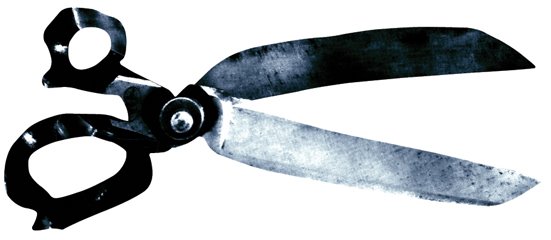
Peek through their Brooklyn porthole and you're looking into an intense mix of activities, values and influences. We were particularly inspired by the crazy attention to fabric-development within their own SvSv collection where they employ pure musk ox qiviuk among other things . We were also floored by our first real-life exposure to their unbelievable collection of antique tailor's shears... it's reassuring to know we're getting help salvaging and caring for these priceless forbearers of our shared tradition.

True to the notion that we need to share this tradition even as we push it forward, they honored the ethic more deeply as we parted ways by entrusting us with the first pair of shears they ever acquired. Judging by the shape and the ornate scabbard they maybe more suitable for an obscure martial-art than for garment-making, but the workmanship is insane.

WORSHIPING TRADITION WITH AN EXPERT
It's a really good day when you can bracket it with learning on both ends. Destroy a little convention at breakfast, worship a little tradition before lunch.

From chewing the fat with Gensler and crew in the morning, the afternoon offered a chance to meditate among a mind-boggling and spirit-moving range indigo drenched folk textiles from Japan as well as Korea and India. Keeper of both the relics and the knowledge, Stephen Sczcepanek, deepened our understanding and appreciation of these traditions well beyond our expectations, given the brief couple of hours we spent with him.


He shared new specimens like ultra-delicate Korean wrapping cloth, deeply patinaed Japanese pawnshop paper, wisteria yarns gathered from jungle vines to be spliced together by hand (not "spun") and woven into one of the rarest fabrics in the world. We're not kidding.

And, of course, there was a tonal kaleidoscope of indigo infused Boro specimens.

DAZED

Thanks very much to the stand-up folks over at Dazed & Confused for helping spread the word this week.

THE GARMENT WORKER

A bronze tailor by Judith Weller gifted to the City of New York in 1984 signifying a gateway to Fashion Avenue.


That much at least is indicated on the plaque. But how he got his hands on our jeans is beyond us, we don't even have distribution in the States. From the look of it we assumed he was practicing the spiral stitch technique for an updated darn-type repair.

Wednesday, July 8, 2009

YANK-EE INGENUITY

Normally when we talk about Yankee Ingenuity we're talking about our shared tradition of making inventive utilitarian improvements to denim and workwear. But this is a whole different take on getting yankee.


Thanks to facebook, I'm slightly ashamed to admit, there are some cool folks digging in the archives for us. Most of their contributions are tangible and end up as specimens in in the DENHAM GARMENT LIBRARY. This one isn't and we've got almost no reason to post it except that it makes us really really smile. To this day denim trends and big marketing concepts are still fickle mistresses, so even now we're not laughing at it. We're laughing with it.

Tuesday, July 7, 2009

BLUESPOKE

A friend of ours is getting married. We'll leave him his privacy but we thought the project we helped him with might provide some council for other folks investigating bespoke.


His idea was to create a fully tailored wedding suit using our selvedge denim. Cool enough.


Whether he anticipated this or not, his concept essentially sets up a glorious collision between two giants of menswear tradition. Beau Brummel and Jacob Davis. The former considered the father of modern suiting and a legendary arbiter of style. The later being the crazy utility tailor and sometime tinker who risked ridicule by slamming machine-rivets into work pants creating the archetypal blue jean.


We've got an addiction to both around here so the request captured our imaginations. We suggested our fabric be crafted into suiting by New Tailor, with ateliers here in Amsterdam and Utrecht. They work in consort with a team of artisans on Savile Row in Mayfair, former stomping ground of the original "Beau" mentioned above.


We were also honored to be the last stop for the finished suit. Jason attached the (kissing) and other buttons here at the studio where our denim fabric was re-introduced to our signature findings in the final stretch of the suit's completion.


Monday, July 6, 2009

THEN WE TAKE BERLIN

Leonard Cohen wrote it. The Antecedents reworked it. Last week, we lived it.


Honestly we hope these posts are read by folks other than industry types, so for the benefit of those who wear jeans for love instead of selling them for money we'll provide a lightnening-fast account of Bread & Butter.

Here goes:


A. Big giant trade show in Berlin. B. Jeanmakers set-up. C. Store buyers visit. D. Wares are shown. E. Flesh is pressed. F. Final consumers are left almost entirely out of the equation which is a damn shame really.


This season the organizers of the show in Berlin created a much needed area for what they described as Labels of Common Kin, or L.O.C.K. Among other characatersisticss the brands housed in the space were meant to represent "substantial craftsmanship". We were invited and we were pleased to be in such good company. This is supposed to be our blog but we'll extend a shout-out to folks like England's Nigel Cabourn, Montreal's Naked & Famous and Ibara city in Okayama's PH7 all whose work was inspiring.


Given the industry focus of these escepades we're left with slightly mixed feelings. We want to pay as much attention to the craft, detail and innovation of the presentation as we do on the product but we're mildly bummed that it's not something everyone gets to see. To ease the pain a little we extended our store-concept as the atmoshpere of the booth so your visit with us in Amsterdam should hopefully have the same vibe.

But, it's not a store, it's a trade-show. So it goes up in a matter of days and the process looks a bit like the impressions we've provided here.

SAME AT IS NEVER WAS

Feeding our heads. In Berlin and at home. Anywhere there's wifi or a modem.

During Bread & Butter we also stuffed most of the content of our DGL archive into a bank of four video-goggles to allow guests to share in the inspiration. One pair was stolen from the exhibit actually, but whoever snagged it forgot to take the converter so we're afraid both sides ended up stymied by the caper.


The fact you can buy technology only recently limited to cyberpunk romps like Strange Days and Johnny Mnemonic in the electronics shop at the airport doesn't make us feel old, it makes us feel lucky.


As readers of our postings here will already know, we host a separate online environment to share the same archive more broadly. Help yourself here.

Saturday, June 27, 2009

COLD COLD WATER

Passion of ownership. Like the scene in Quadrophenia when the Pete Townshend character as just washed his jeans in the bath. A great moment in cinema and a cool reminder of the boyish pride we're allowed to take in maintaining stuff in the right way.


For us the right way goes easy on the shrink effect since skin tight, at least on men's jeans, isn't what we're after. But washing your jeans the right way absolutely brings them to life, magnifies character and personalizes the fit. Ali had worn his long enough that they were nearly able to walk around on their own, and that's about the minimum time to wait before washing if you want to generate the best character lines and natural color contrasts afterwards.


Here's our advice. It's easy: 1. Cold water with natural soap powder. 2. Invert your jeans and slide them in. 3. Hand wash and enjoy the process, work the fabric, swish 'em around, exercise a little finesse. 4. Dump the soapy/dirty wash-water and reload with another helping of cold cold water as a rinse. 5. Rinse the same way you washed. 6. Handwork the jeans as they're submersed. 7. Pull 'em out, wring them out, turn them back the right-side-out and hang them vertically to dry. 8. -But before you walk away and let science, nature and evaporation do their thing, take one more pass at handworking the damp jeans into shape. Work through the seams and creases, shape the legs and get 'em expressing the attitude you like. 9. Then walk away and let nature take its course.

OR... Follow the technique of Sir Bob of Butcher of Blue (and Denham) who puts even more punk into the process. Check it out HERE

Friday, June 26, 2009

HOME REPAIR

The fact good jeans are an investment is dumb-obvious. If you're reading this blog, you already know that. The fact that there are so many ways to look after that investment, with so many different possible results, is partly what makes denim culture such a kick-in-the-pants.

About five years ago, James Harlan came across an abandoned shack near the Dan River above Greensboro. Instead of South Carolina ginseng Harlan found himself rooting through a tobacco sharecropper's trash and hauling home a pile of worn-out denim covered with wasps' nests....

The Harlan Find was commemorated in the A-Life designed mini catalog, FOUND. It's a remarkable thing. Among other things it managed to use pictures to teach a particularly dignified approach to home-repair. It's a technique we were already familiar with having examined it as it appears on specimens in the DENHAM GARMENT LIBRARY.


You could call it a "darn-type" and it uses a spiral stitch and backside patch to repair wear areas with a forthright rural dignity. We use a machine 'cuz we have one but it's based on a hand-stitch technique.

Jason managed to grind through portions of the heel cuff roll on his Tapers (remember, a couple of the guys ran them 9 months straight without a break), and took the opportunity to demonstrate the process here in the atelier.


Not as flashy and trashy as an LA rock-star. -But different strokes for different folks. We like both extremes depending on the mood. More important is that the TAKING CARE ethos makes living in any pair of premium-quality jeans a dynamic and one-of-a-kind experience. Hell yeah.

Monday, June 22, 2009

ONE KILO MELTON

We told the story of the 1 Kilo Melton "Medic" style for men which will be landing here as part of the new Fall collection. At some point it occurred to us that 100 pieces of 10cm x 10cm would constitute 1sqm of fabric. It also occurred to us that if we placed those 100 pieces all on top of each other, it would make a pretty thick and soft stack of melton. And finally, that this stack would weigh the same kilo of the original 1sqm piece.

So we tried it.


This gives some impression of the quality's substance and character.


We also keep telling the story of our regular use of traditional garments as starting-off points for design from our own archive, the DENHAM GARMENT LIBRARY. On a recent trip abroad we stumbled on a gorgeous men's battle-dress or "Ike" jacket that reminded us why we chose this melton in the first place.


A design-standard for the British Royal Navy, this specimen carries all of the original tag documentation attached via a lead seal (still intact) indicating that it is to be used as the design-reference for tailors and producers who were expected to create this style for serviceman. This is an essentially a 3-dimensional design file issued by the British Admiralty. It also bears the names, dates and signatures of those who had "signed it out" (like a library book) in order to ensure design consistency and reliable quality. The piece was issued by the Admiralty in 1946.


Combine the sheer quality of the fabrication with the authenticity of an original archive and you've created exactly the right platform from which to progress your own designs forward. That's how we see it anyway.


For Fall the journey that started with these ideas resulted in a range of styles in both the men's and women's collections. Each model is built with as much combined style, attitude and integrity as we could muster and all of it will be here before we know it.

Wednesday, June 17, 2009

3-WAY COLLISION

We promised we'd start leaking out some love stories for Fall 2009 since it'll be delivering in the not-too-distant future (and because we're stoked about the progress it represents and we can't wait to start banging our pots and pans).

We go on and on about the DENHAM GARMENT LIBRARY and the crucial importance of an archive. You can't build something strong on a weak foundation and, for us, the archive and the combined tradition and craftsmanship it teaches us represents that foundation.

But we're also not about managing the reproduction of one-to-one replicas of old garments. We readily confess our deep admiration for many of the brands who are busy with that idea in the emerging "Otaku" scene because some of them demonstrate great taste and good quality, but the direct approach isn't exactly our bag.


We'd prefer to try and pick up where our predecessors and contemporaries may have left off and try to push things forward.

Arriving in the Fall collection is the new CUSTOM jean and it's a good example of this ambition. Taking inspiration from German field pants of the 1930's blended with detailing from American hunting pants from the 50's and new ideas from contemporary wintersport designs, the CUSTOM strives to create progression by folding diverse influences together into a rugged modern jean model for this millennium.

GARMENTS FROM TENT FABRIC

Below we posted a piece about our upcoming exhibition of the SPY BORO series at Bread & Butter Berlin.

The girls weren't the only ones cutting into found fabrics and repurposing them into new designs. After all, that's supposed to be the mantra around here. Worship Tradition, Destroy Convention.


One of the legends of the birth of modern jeanscraft is the story about American workwear tailors crafting pants out of the tough fabric intended for tents during the Gold Rush and the expansion West. There are other stories but the central notion of making clothing from fabric intended for temporary housing is what inspired this other exercise in re-purposing to be dislayed in Berlin.


Also developed as a limited edition for Spring 2010 the MEDIC INTEL employs reclaimed 3-Layer Gore-Tex Dutch Marine "bivouac" sleeping-shells which were taken apart in order to create a variation on the new 1KILO MELTON MEDIC which is soon landing in shops for Fall.

Like the Gold Rush canvas tents before them, the Dutch Marine Bivouacs contain all the rugged fabric-features required to produce a tough utlity garment and the MEDIC model provided the right tailored starting-point.


The construction introduces new ideas like a buttonhole-free buttoning closure and the employment of a biker's bi-swing action back as well as traditional techniques like felled seams...

Gore insists on seam-taping but we won ourselves a little creative latitude by using repurposed material (in other words we did it without asking). In fact, the traces of the original taped-seam assembly are visible within our reconstruction, the ghost of the fabric's first life showing through.


(NOTE: This is a use of Gore-Tex fabric that didn't go through the usual channels and we're still not sure how you "market" a jacket with this feature when it wasn't a sanctioned Gore project but we assume we'll find out soon enough)

Also like the Boro Spy jackets, these won't be in front of consumers until Spring 2010 (sorry about that), but they will be on show earlier at July's Bread & Butter event.